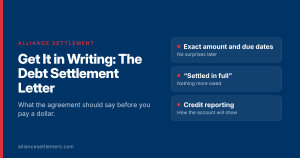
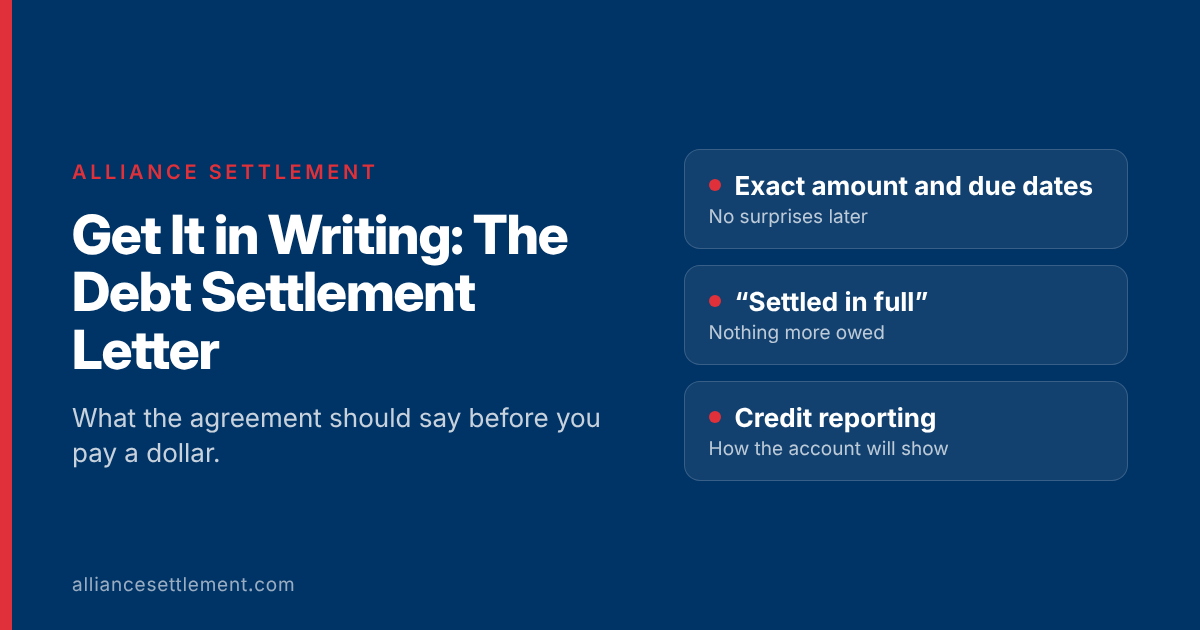
Quick answer: A debt settlement letter is the creditor’s written agreement to accept less than you owe. Before you pay anything, it should state the exact amount, the payment dates, that the payment settles the account in full, and how the account will be reported to the credit bureaus. Keep a copy and pay only as the letter says.
What a debt settlement letter is
When a creditor or collection agency agrees to accept less than the full balance, the settlement letter (or settlement agreement) is the written record of that deal. It protects you if the account is later sold, sent to another collector, or reported incorrectly.
What the letter should say
- Who is agreeing. The creditor’s or collector’s name, and the original creditor if the debt was sold.
- Which account. Your name and the account number, or at least the last four digits.
- The exact settlement amount. A dollar figure, not a percentage.
- The payment schedule. One lump sum or installments, with each due date and amount.
- That the payment settles the debt in full. Wording such as “settled in full” or “satisfies the account,” so nothing more is owed.
- How it will be reported. Usually “settled for less than the full balance.” Ask what they will report before you agree.
- No further collection. The account won’t be sold or sent to another collector for the remaining balance.
- A signature and date on company letterhead or from the company’s email domain.
Before you pay
- Read every line. Make sure the amount and dates match what you agreed to.
- Pay the way the letter says, using a traceable method, and never more than the agreed amount.
- Save everything: the letter, payment confirmations and any emails.
- Check your credit report 30 to 60 days after the final payment to confirm the account shows as settled. Here is how debt settlement affects your credit.
Red flags
- The collector won’t put the deal in writing.
- The letter doesn’t say the payment settles the account in full.
- You’re asked to pay into an unusual account or by gift card.
- A company wants fees before it has settled anything. That’s against federal rules for debt settlement companies. See common debt settlement scams and how settlement fees work.
How Alliance Settlement handles settlement letters
Alliance Settlement negotiates with your unsecured creditors, such as credit cards, personal loans and medical bills, to reduce what you owe. We get each settlement in writing before any payment is made from your dedicated account, and we charge no fees until a debt is settled. Programs typically run 12 to 48 months. Clients who live in New Jersey are served through our partner law firm.
Want to know what creditors typically accept? Read how much credit card companies will settle for, or if you’re handling it yourself, how to settle debt yourself.
Frequently asked questions
Should I pay a settlement before I get it in writing?
No. Get the settlement terms in writing from the creditor or collector first, and keep a copy. A phone promise is hard to prove later.
Will the settlement letter say the debt is paid in full?
It should say the account is settled in full for the agreed amount, or that the payment satisfies the debt. Then nothing more is owed on that account.
Will a settled account still show on my credit report?
Usually yes. It is typically reported as settled for less than the full balance. Ask the creditor to state in the letter how it will report the account.
Do I owe taxes on the forgiven amount?
You might. Creditors may send a Form 1099-C for forgiven debt. If you were insolvent when the debt was forgiven, you may not owe tax on it. Ask a tax professional.
See if you qualify for a free consultation →
This article is general information, not legal, tax or financial advice.