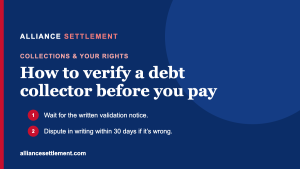
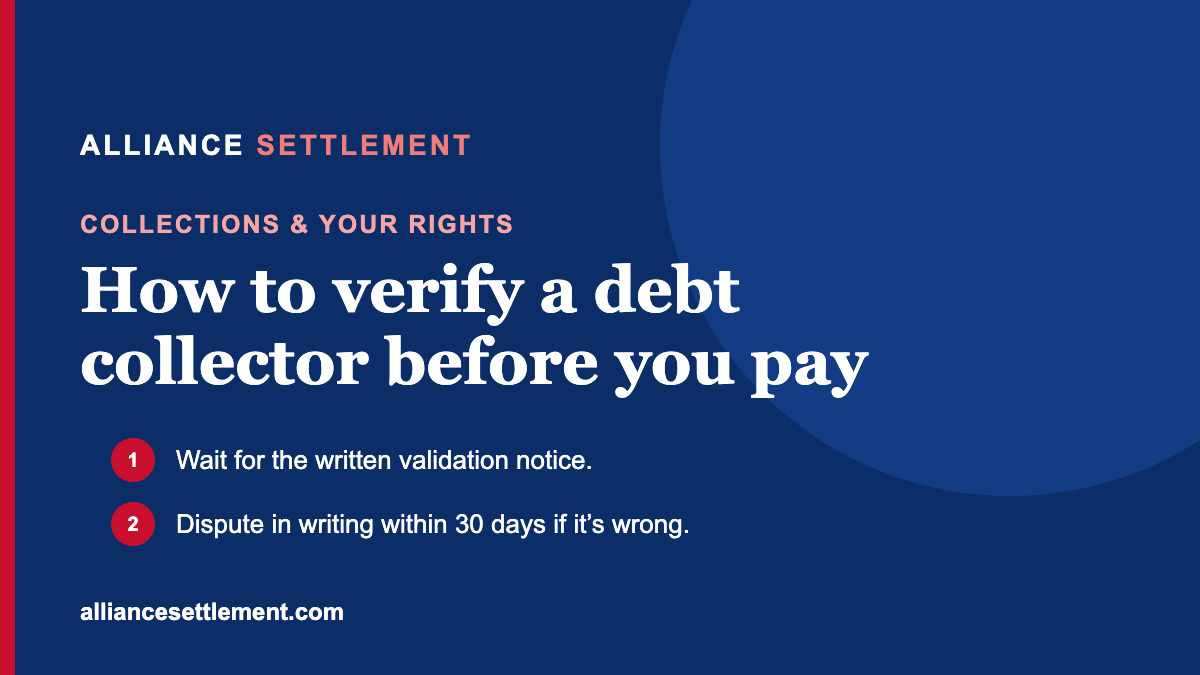
Quick answer: Before you pay a debt collector, get the company’s name, mailing address and the original creditor, then wait for the written validation notice. Debt collectors generally must send it within five days of first contacting you. If anything looks wrong, dispute the debt in writing within 30 days of receiving that notice, and the collector has to pause collection until it sends verification. Never pay with gift cards or wire transfers, or give bank details to someone you can’t verify.
A call or letter from a debt collector you’ve never heard of is unsettling, especially when the caller wants payment today. Some of these calls are legitimate collectors working accounts that were sold or placed for collection. Others are scams. A few minutes of checking protects you either way.
Step 1: Get the basics, and don’t pay on the first call
Ask for the collector’s company name, mailing address, phone number, the name of the original creditor and the amount they say you owe. A legitimate collector will give you all of it. You don’t have to confirm the debt, agree to pay or share bank or card details on that call.
Step 2: Wait for the validation notice
Under federal rules, a debt collector generally must send you a validation notice within five days of first contacting you. It should include:
- The name of the creditor you owe and the account number.
- An itemization of the amount owed, including interest, fees, payments and credits since a set date.
- The date by which you can dispute the debt.
- How to dispute it, including a tear-off form you can mail back.
Compare the notice with your own records. Old statements, a credit report and the basics of what happens when debt goes to collections help you spot mistakes.
Step 3: Dispute in writing within 30 days if anything is wrong
If you don’t recognize the debt, the amount looks wrong or the account isn’t yours, send a written dispute within 30 days of receiving the validation notice. Ask for proof of the debt and the name and address of the original creditor. Send it by certified mail with a return receipt, and keep a copy. If you dispute in writing within that window, the collector has to stop collecting until it mails you verification.
Step 4: Check the collector itself
- Search the company name with “complaints” and check the Consumer Financial Protection Bureau’s complaint database and the Better Business Bureau.
- Many states require debt collectors to be licensed. Your state attorney general or banking regulator can tell you whether a company is licensed where you live.
- Call the original creditor and ask whether the account was sold or placed with that collector.
Signs it may be a scam
- Threats of arrest or jail, or threats to tell your employer or family about the debt.
- Demands for payment by gift card, wire transfer, payment app or cryptocurrency.
- Refusing to give a mailing address or send anything in writing.
- Asking for your full Social Security number or bank login to “verify” you.
- Pressure to pay today to avoid a lawsuit that has never been filed.
If a collector crosses these lines, read debt collector harassment and your rights.
Be careful with very old debt
Every state sets a time limit for suing over a debt. In some states, even a small payment or a written promise to pay can restart that clock. Before paying anything on an old account, read the statute of limitations on debt. If a collector has already sued, see can a debt collector sue you and don’t miss the deadline to respond.
If the debt is real, get any deal in writing
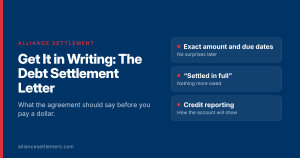
If the debt is valid and you want to settle it, get the terms in writing before you pay, and pay in a way you can trace. Here’s what a debt settlement letter should say.
If several collectors are calling at once, it helps to have a plan for all of your unsecured debt rather than one account at a time. Alliance Settlement works with consumers carrying credit card, personal loan and medical debt, with no upfront fees. Programs typically run 12 to 48 months, and our team has been settling consumer debt since 2009. New Jersey clients are served through our partner law firm. Call (866) 376-2333 for a free consultation, or see debt relief options in your state.
Frequently asked questions
How do I know if a debt collector is legitimate?
A legitimate collector will give you its company name, mailing address and the original creditor, and it must send a written validation notice. Check the company with your state’s licensing regulator, the CFPB complaint database and the original creditor before you pay.
What is a debt validation notice?
It’s a written notice a debt collector generally must send within five days of first contacting you. It lists the creditor, an itemized amount owed, the date by which you can dispute the debt and how to dispute it.
How long do I have to dispute a debt?
You have 30 days from receiving the validation notice. If you dispute in writing within that period, the collector must stop collecting until it mails you verification of the debt.
Should I give a debt collector my bank information over the phone?
Not until you’ve verified the collector and the debt in writing. Never pay by gift card, wire transfer or cryptocurrency, and never share a bank login.
Can paying an old debt restart the statute of limitations?
In some states, yes. A payment or a written promise to pay can restart the time limit for a lawsuit, so check the rules in your state before paying an old account.
This article is for general information and isn’t legal advice. Debt collection rules vary by state; talk to a licensed attorney about a lawsuit or judgment.