Quick answer
Debt consolidation combines several debts into one new loan or payment, and you still repay the full balance, ideally at a lower rate. Debt settlement negotiates with creditors to accept less than the full balance. Consolidation fits if you can afford the debt at a better rate; settlement fits if you can’t afford to repay it in full.
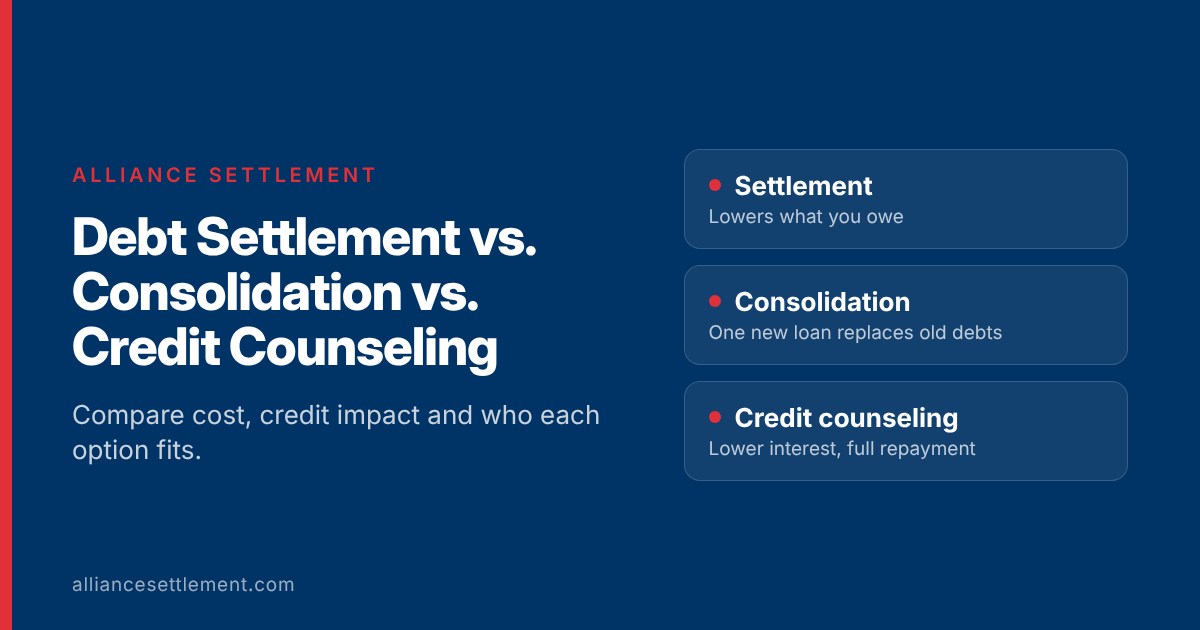
Short answer: Debt settlement reduces the balance you owe, but it hurts your credit and takes months of saving. Debt consolidation replaces several debts with one new loan, but you need good enough credit to qualify. Credit counseling sets up a repayment plan at lower interest, and you still repay the full balance.
Debt settlement vs. consolidation vs. credit counseling, side by side
| Debt settlement | Debt consolidation | Credit counseling (debt management plan) | |
|---|---|---|---|
| What changes | Creditors accept less than the full balance | A new loan pays off old debts | Creditors lower interest and fees |
| Do you repay the full balance? | No | Yes, plus loan interest | Yes |
| Credit impact | Significant drop while accounts go unpaid | Small, and can improve over time | Usually mild; enrolled accounts may be closed |
| Who it fits | Can’t afford minimum payments, mostly unsecured debt | Steady income and fair-to-good credit | Can afford payments if interest drops |
| Typical cost | A percentage of enrolled debt, charged only after each settlement | Loan interest and possible origination fee | Small monthly fee, often through a nonprofit |
What is debt settlement?
Debt settlement means negotiating with creditors to accept less than you owe. You stop paying the creditors directly and make monthly deposits into an account you control. When enough money builds up, the settlement company offers creditors a lump sum to close each account.
What is debt consolidation?
Debt consolidation is a new loan or balance-transfer card that pays off your existing debts, leaving you with one monthly payment. It only saves money if the new interest rate is lower than what you pay now, and approval depends on your credit and income.
What is credit counseling?
Nonprofit credit counseling agencies can set up a debt management plan. The agency asks your creditors to lower interest rates and waive fees, and you make one monthly payment to the agency until the full balance is repaid, usually in three to five years. Read more in debt settlement vs. credit counseling.
Things to know before choosing debt settlement
- No upfront fees. Federal rules ban debt settlement companies from charging fees before they settle a debt and you’ve made a payment under that settlement.
- Forgiven debt can be taxable. Creditors may send a 1099-C for forgiven amounts. If you were insolvent when the debt was forgiven, you may not owe tax on it. Ask a tax professional.
- Creditors can still sue. A settlement company can’t stop a creditor from filing a lawsuit while you’re in the program. See what happens if you stop paying your credit cards.
- Some creditors won’t settle. Results depend on each creditor and how far behind the account is.
Comparing companies? Use our 10 questions to ask a debt settlement company.
Frequently Asked Questions
Which is better for my credit, consolidation or settlement?
Consolidation usually does less damage, as long as you make every payment on time. Settlement generally involves accounts that are behind, so it affects your credit more in the short term.
Does Alliance Settlement offer consolidation loans?
No. Alliance Settlement is a debt settlement company. It helps clients settle unsecured debts for less than the full balance, with no upfront fees.
How Alliance Settlement works
Alliance Settlement negotiates with your unsecured creditors, such as credit cards, personal loans and medical bills, to reduce what you owe. You make one monthly deposit into an account you control, and we charge no fees until a debt is settled. Programs typically run 12 to 48 months. Clients who live in New Jersey are served through our partner law firm.
See if you qualify for a free consultation →
This article is general information, not legal, tax or financial advice.