Quick answer: A deficiency balance is what you still owe after a repossessed car is sold for less than the loan balance plus repossession and sale costs. It's usually unsecured debt, so you can ask for a written breakdown, dispute charges that look wrong and often settle it for less than the full amount. Don't ignore it: the lender or a debt buyer can send it to collections or sue.
Losing a car to repossession is hard enough. Then a letter arrives saying you still owe thousands of dollars on a car you no longer have. That amount is called a deficiency balance, and it’s one of the most common debts people bring to a debt settlement company.
How a deficiency balance is calculated
After a repossession, the lender usually sells the car, often at auction, where prices are lower than retail. The deficiency is roughly:
- What you still owed on the loan, plus
- Allowed repossession, storage and sale costs, minus
- What the car sold for.
For example, say you owed $14,000, the costs of repossessing and selling the car came to $1,200, and the car sold at auction for $7,500. The deficiency balance would be about $7,700.
Notices the lender has to send
Under the Uniform Commercial Code, which nearly every state follows, a lender that sells a repossessed car generally has to:
- Tell you before the sale, with the time and place of a public auction or the date after which a private sale will happen.
- Sell the car in a commercially reasonable way, meaning a normal, fair process rather than a quick sale to an insider for a token price.
- Explain the math when you ask, including how the sale money was applied and how the deficiency was figured.
State rules add their own requirements, and some states limit deficiency balances on smaller loans. If a notice is missing or the sale price looks far too low, that can reduce or even wipe out what the lender can collect, so ask a consumer attorney to look at it.
What to do when you get a deficiency notice
- Ask for a written breakdown of the payoff, every fee and the sale price.
- Check the fees. Look for duplicate charges, long storage periods or reconditioning costs that seem too high.
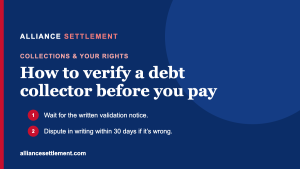
- Find out who owns the debt. Deficiency balances are often sold to debt buyers. Before you pay anyone, verify the debt collector.
- Don’t ignore a lawsuit. Missing the deadline can lead to a default judgment and wage garnishment. See can a debt collector sue you?
- Check the statute of limitations in your state before making a payment on an old balance. Here’s how the statute of limitations on debt works.
Can you settle a deficiency balance?
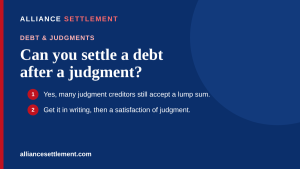
Often, yes. Once the car is sold, the deficiency is usually unsecured debt, just like a credit card balance. Lenders and debt buyers frequently accept a reduced lump sum or a short payment plan, especially after the account has been charged off. Get any settlement in writing before you pay, and make sure it says the balance will be reported as settled. Here’s what a debt settlement letter should say.
If $600 or more is forgiven, you may receive a Form 1099-C. Read is settled debt taxable? before you file.
How Alliance Settlement can help
Alliance Settlement helps people with unsecured debt, including credit cards, personal loans, medical bills and balances left after a car repossession. We review what you owe, explain your options in plain language and negotiate with creditors on your behalf. There are no upfront fees, and programs typically run 12 to 48 months. Results vary by case. Call (866) 376-2333 for a free consultation.
Frequently asked questions
Do I still owe money after my car is repossessed?
Often, yes. If the car sells for less than you owed plus repossession and sale costs, the difference is a deficiency balance, and the lender or a collector can try to collect it.
How is a deficiency balance calculated?
Start with the loan payoff, add allowed repossession, storage and sale costs, then subtract what the car sold for. Ask the lender for a written breakdown.
Can a deficiency balance be settled for less?
Often, yes. A deficiency balance is usually unsecured debt, so lenders and collectors may accept a reduced lump sum or a short payment plan, especially after the account is charged off.
Can I be sued for a deficiency balance?
Yes. The lender or a debt buyer can sue to collect it before the statute of limitations runs out. Respond to any lawsuit by the deadline.
Will a settled deficiency balance be taxed?
Possibly. If $600 or more is forgiven, the lender may send a Form 1099-C, though you may not owe tax if you were insolvent. Ask a tax professional.
This article is for general information and isn’t legal or tax advice. Repossession and deficiency rules vary by state; talk to a consumer attorney about your situation.