
Is Settled Debt Taxable? Understanding Form 1099-C
When a creditor forgives part of what you owe, the IRS may treat that amount as income. Here is how Form 1099-C works and when the insolvency exclusion can help.
When a creditor forgives part of what you owe, the IRS may treat that amount as income. Here is how Form 1099-C works and when the insolvency exclusion can help.

Debt settlement usually lowers your credit score for a while. Here is why it happens, how long the impact lasts, and how to rebuild once your debts are resolved.

Struggling with debt can lead to more than financial problems — it can affect your emotional well-being, too. Learn how debt impacts mental health and what steps you can take today to regain peace of mind and control over your future.

Debt consolidation can simplify your financial life—but it’s not a one-size-fits-all solution. Learn how it works, when it makes sense, and what alternatives you should consider.

Debt can be an emotional burden, especially when discussing it with loved ones. Here’s how to have honest, empowering conversations with your family about financial struggles—without guilt or fear.

Debt settlement isn’t an overnight fix, but with the right plan, it can be faster than you think. Learn what factors impact the timeline and what to expect.

It might be tempting to avoid collection calls and bills, but ignoring debt can lead to serious financial and legal consequences. Here’s what you need to know.
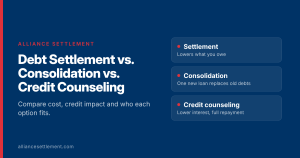
Settlement lowers what you owe, consolidation replaces it with a new loan, and credit counseling lowers your interest rate. Compare cost, credit impact and who qualifies.
Making only the minimum payments on your credit cards may seem like a safe option, but it can trap you in debt for years. Learn why this happens and how to break free.
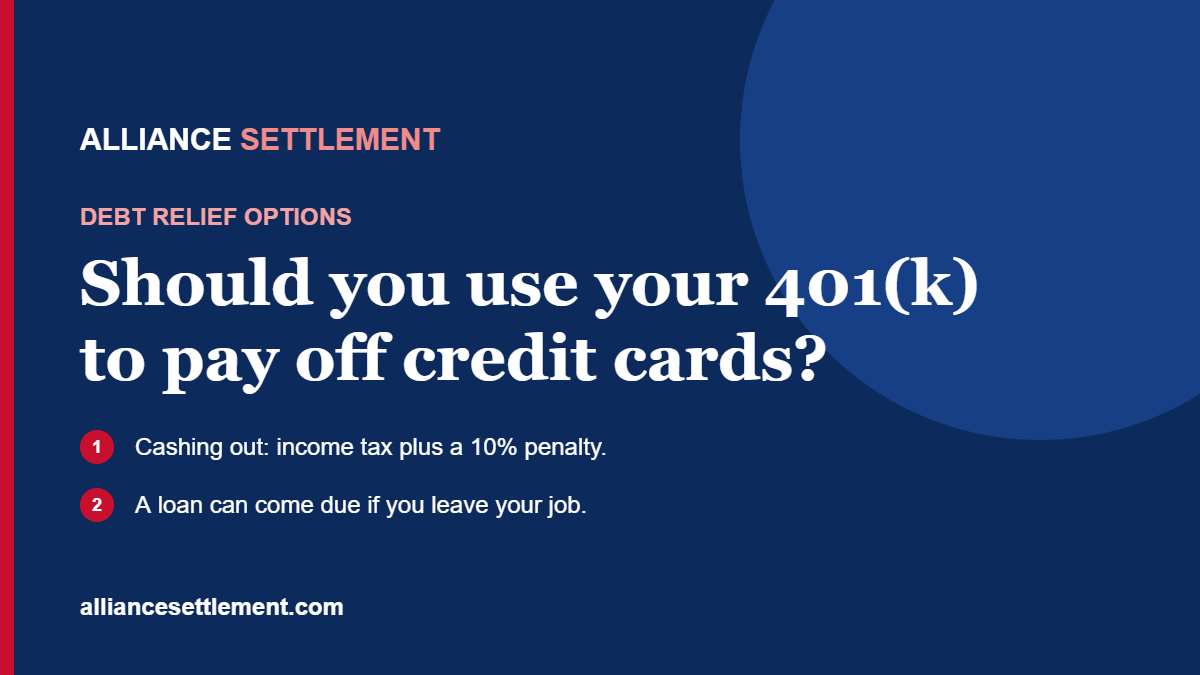
Cashing out or borrowing from a 401(k) to pay credit cards can cost taxes, a 10% penalty and lost growth. How each option works and what to try first.
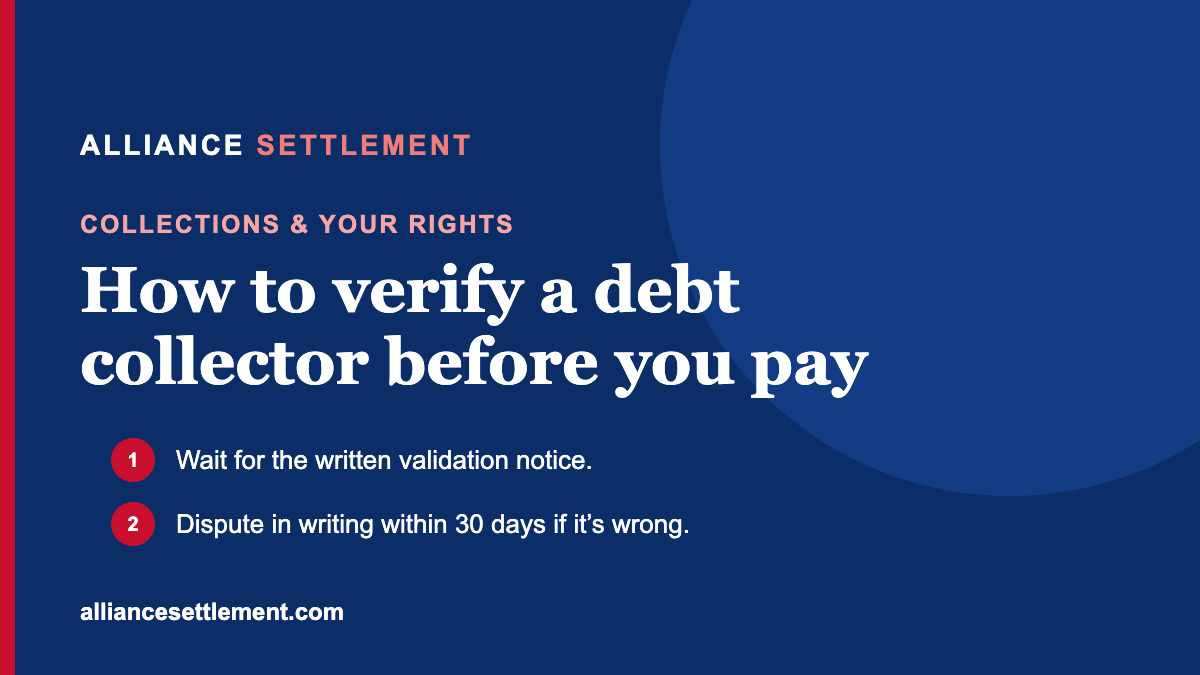
How to check that a debt collector and the debt are real before you pay: the validation notice, the 30-day written dispute, licensing checks and scam warning signs.
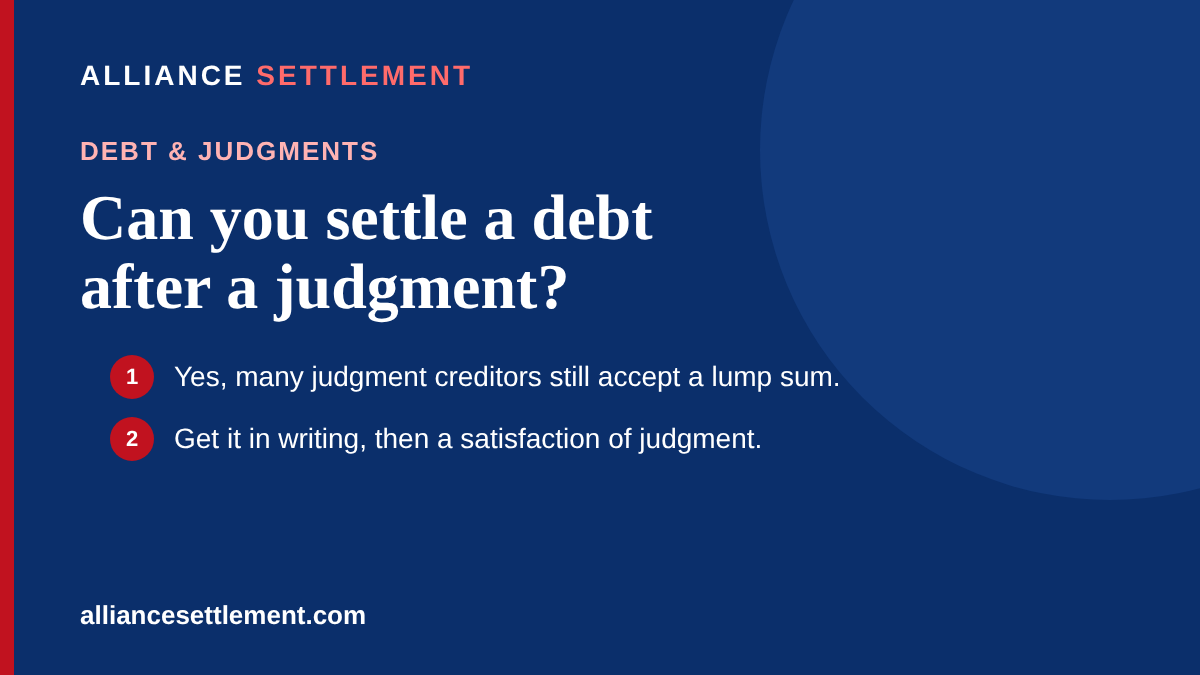
Yes, many creditors still settle after a court judgment. What a judgment changes, federal limits on wage garnishment and bank levies, and how to settle a judgment safely.
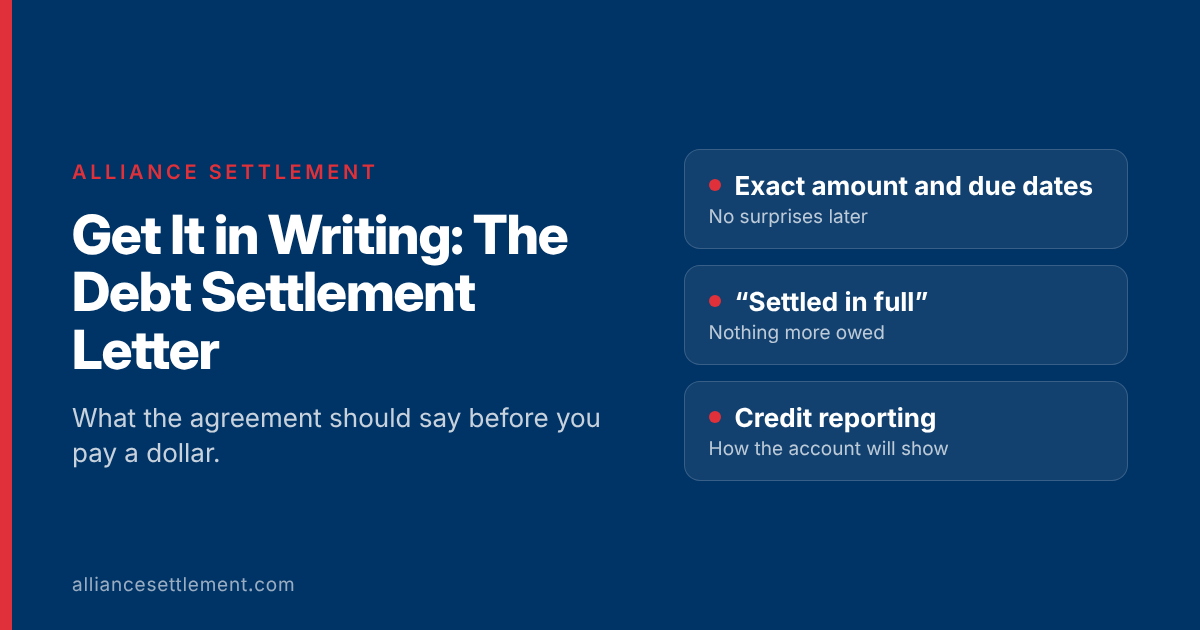
A debt settlement letter is the creditor’s written agreement to accept less than you owe. What it should say, what to check before you pay, and red flags.

What happens month by month when you stop paying credit cards: late fees, credit reporting at 30 days, penalty APR, charge-off at about 180 days, collections and lawsuits, plus your options at each stage.
Comparing debt settlement companies? Ask these 10 questions, watch for these red flags, and know the FTC rule every legitimate company follows.

You can often settle debt yourself for less than you owe. Here is a step-by-step guide to negotiating with creditors, getting the deal in writing, and when to get help.

A debt in collections is still a debt you can deal with. Here is what happens when a debt goes to collections and what to do next, step by step.
New York gives consumers some of the strongest debt protections in the country. Learn how the 3-year statute of limitations and the Consumer Credit Fairness Act work.