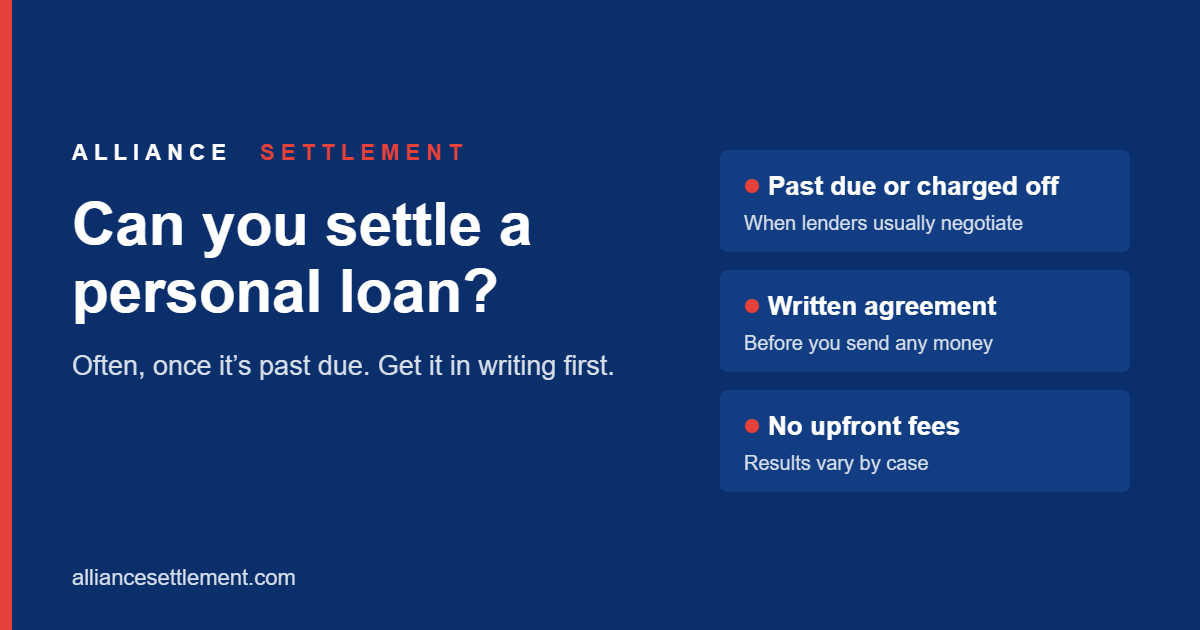
Quick answer: Yes, a personal loan can often be settled once it is past due. Most personal loans are unsecured, so the lender or a debt buyer may accept less than the full balance, usually as a lump sum or a short payment plan. Expect a hit to your credit, get the agreement in writing before you pay, and keep in mind that forgiven debt can be taxable. A lender that has already sued may still settle, but the deadlines matter more.
Personal loans from online lenders, banks and credit unions are one of the most common debts people bring to a settlement program, often alongside credit cards. If you have fallen behind, here is how settling a personal loan works and what to watch for.
When a lender will consider a settlement
- The account is past due. Lenders rarely settle a loan that is current. Most settlements happen after several missed payments.
- The loan is charged off or sold. After about 120 to 180 days without payment, many lenders charge off the loan and either keep collecting or sell it to a debt buyer. Here’s what a charged-off account means.
- A lump sum or short plan is on the table. Lenders and debt buyers usually prefer a single payment or a plan of a few months.
How personal loan settlement works
- Find out who owns the debt. It may still be with the lender, or with a collection agency or debt buyer. Before you pay anyone new, verify the debt collector.
- Build up the settlement funds. Most people set aside money each month in an account they control until there is enough for an offer.
- Negotiate the amount and terms. The offer depends on the balance, how old the debt is and what the creditor has accepted before.
- Get it in writing before you pay. The letter should name the account, the amount, the payment date and state that the balance will be considered settled. Here’s what a debt settlement letter should say.
- Pay exactly as agreed and keep the proof.
What settling does to your credit and taxes
Missed payments before the settlement are reported to the credit bureaus, and the loan is usually marked as settled rather than paid in full. The effect tends to fade as the debt gets older and other accounts stay current. If $600 or more is forgiven, you may receive a Form 1099-C. Here’s when settled debt is taxable.
If the lender has already sued
Don’t ignore the papers. A lawsuit doesn’t end the chance to settle, but missing the deadline to respond can lead to a judgment and wage garnishment. Here’s whether you can settle debt after a judgment.
How Alliance Settlement can help
Alliance Settlement helps people with unsecured debt, including personal loans, credit cards and medical bills. We review everything you owe, explain your options in plain language and negotiate with each creditor on your behalf. There are no upfront fees, and programs typically run 12 to 48 months. Results vary by case. Call (866) 376-2333 for a free consultation, or see which debts can be settled.
Frequently asked questions
Can you settle a personal loan?
Often, yes. Most personal loans are unsecured, so once an account is past due or charged off, the lender or a debt buyer may accept less than the full balance as a lump sum or a short payment plan.
How much will a lender settle a personal loan for?
It varies by lender, how far behind the account is and whether it has been sold to a debt buyer. There is no fixed percentage, and results vary by case.
Does settling a personal loan hurt my credit?
It can. The late payments before the settlement are reported, and the account is usually marked as settled rather than paid in full. The impact usually lessens over time.
Is a settled personal loan taxable?
It can be. If $600 or more is forgiven, the lender may send a Form 1099-C, and the forgiven amount may count as income unless an exception such as insolvency applies. Ask a tax professional.
Can a secured personal loan be settled?
Sometimes, but it is harder. If the loan is secured by a car, savings or other collateral, the lender can usually take the collateral instead of settling.
This article is for general information and isn’t legal, tax or financial advice. Each lender sets its own collection and settlement practices.