Should You Use Your 401(k) to Pay Off Credit Card Debt?
Cashing out or borrowing from a 401(k) to pay credit cards can cost taxes, a 10% penalty and lost growth. How each option works and what to try first.
Cashing out or borrowing from a 401(k) to pay credit cards can cost taxes, a 10% penalty and lost growth. How each option works and what to try first.
How to check that a debt collector and the debt are real before you pay: the validation notice, the 30-day written dispute, licensing checks and scam warning signs.
Yes, many creditors still settle after a court judgment. What a judgment changes, federal limits on wage garnishment and bank levies, and how to settle a judgment safely.
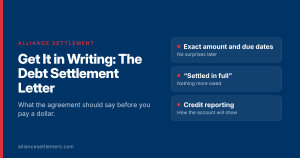
A debt settlement letter is the creditor’s written agreement to accept less than you owe. What it should say, what to check before you pay, and red flags.

What happens month by month when you stop paying credit cards: late fees, credit reporting at 30 days, penalty APR, charge-off at about 180 days, collections and lawsuits, plus your options at each stage.
Comparing debt settlement companies? Ask these 10 questions, watch for these red flags, and know the FTC rule every legitimate company follows.

You can often settle debt yourself for less than you owe. Here is a step-by-step guide to negotiating with creditors, getting the deal in writing, and when to get help.

A debt in collections is still a debt you can deal with. Here is what happens when a debt goes to collections and what to do next, step by step.
New York gives consumers some of the strongest debt protections in the country. Learn how the 3-year statute of limitations and the Consumer Credit Fairness Act work.

As 2025 unfolds, financial landscapes are shifting rapidly. From AI-driven banking to sustainable investing, staying ahead requires adaptability and smart strategies. This article explores expert insights and actionable steps to help you build financial security in the year ahead.

Breaking free from debt starts with knowledge. Financial literacy empowers individuals to make informed decisions, budget effectively, and build long-term wealth. In this article, we explore how understanding key financial principles—like smart budgeting, investing, and debt management—can help you regain control of your money. Learn actionable strategies to improve your financial health, avoid common pitfalls, and create a stable, debt-free future. Ready to take charge of your finances? Start your journey to financial freedom today!

Financial success isn’t just about numbers—it’s about mindset, discipline, and learning from those who have paved the way. In this article, we explore timeless wisdom from great leaders, offering practical strategies to help you take control of your money, eliminate debt, and build a secure financial future. Whether you’re struggling with budgeting, investing, or saving, these insights will empower you to make smarter financial decisions and create lasting wealth.

A real-life look at how Alliance Settlement helps clients break free from debt. Featuring testimonials, this article showcases the impact of professional debt negotiation and the path to financial stability.

After completing debt settlement, maintaining a budget is key to staying debt-free. Start by assessing your income and fixed expenses, then track your spending. Set clear financial goals and prioritize needs over wants. Use the 50/30/20 rule: 50% for essentials, 30% for wants, and 20% for savings or debt repayment. Build an emergency fund with 3-6 months’ worth of expenses and automate payments. Review your budget monthly and adjust as needed. Budgeting helps you avoid new debt and stay on track toward financial freedom.

Financial stress is a common challenge, but it’s manageable with the right approach. Start by creating a budget, tracking spending, and prioritizing essential expenses. Build an emergency fund to cushion unexpected costs and use debt repayment strategies like the snowball or avalanche method. Increase your financial literacy through books or online courses to feel more in control. Seeking professional advice or talking to loved ones can also ease anxiety. Over time, focusing on long-term financial goals and practicing stress management will help you build resilience and reduce financial stress for good.

Debt settlement scams are widespread, often involving upfront fees, false promises of quick debt relief, and high-pressure tactics. These fraudulent companies prey on vulnerable individuals seeking financial help. To avoid falling victim, never pay upfront fees, research the company’s reputation, and set realistic expectations for debt resolution. Always verify credentials, read contracts thoroughly, and consult with a financial advisor or nonprofit credit counselor. Stay vigilant, protect yourself, and make informed decisions to secure legitimate debt relief.

Struggling with debt? You don’t have to face it alone. Communities worldwide are proving that collective action—through peer lending, crowdfunding, and financial education can help individuals break free from financial burdens. Real success stories show how people have erased debt with the power of community support. Discover how you can leverage these strategies to regain financial stability and take control of your future. Ready to start your journey to debt freedom? Learn how community driven solutions can make a difference today!