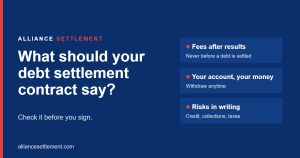
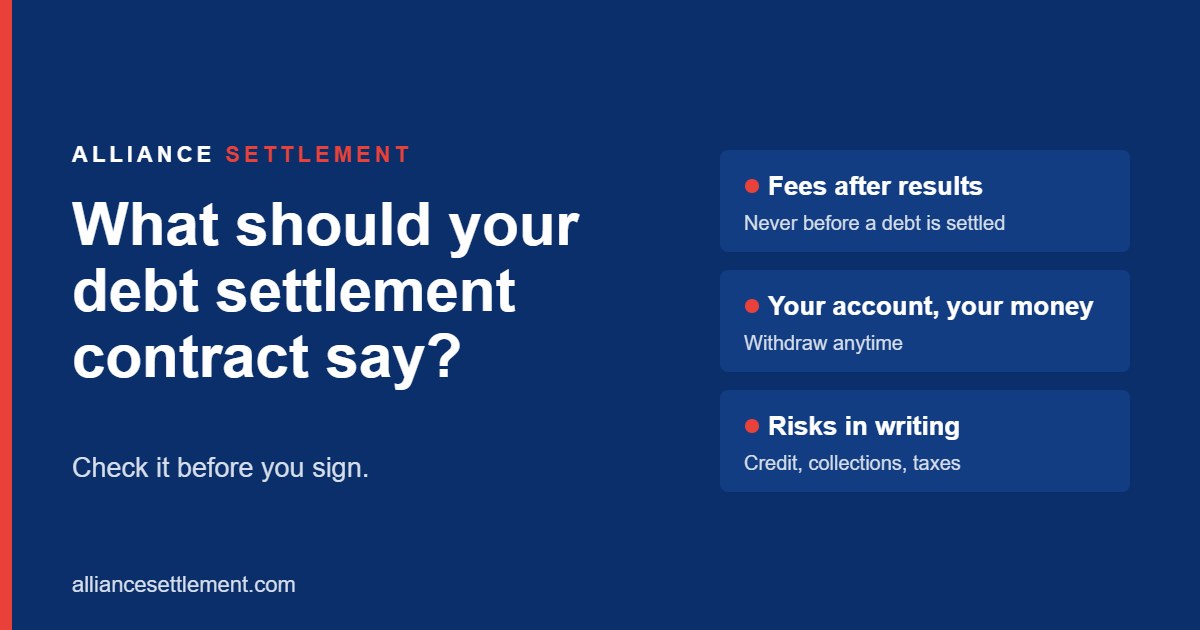
Quick answer: A debt settlement contract should list every debt you are enrolling, state the fee and when it is charged (never before a debt is settled and you have made a payment on that settlement), explain who controls the account your savings go into, give an estimated timeline, warn you about the effects on your credit and taxes and tell you how to cancel and get your money back. If any of that is missing or vague, ask for it in writing before you sign.
The enrollment agreement is the document that decides what you will pay, when, and what happens if you change your mind. Most people skim it on the same call they first hear about the program. Here is what it should say, section by section, so you can check yours.
1. The debts you are enrolling
The contract should list each account by creditor, the last four digits and the balance at enrollment. That balance matters: under federal rules, fees are calculated from what you owed when the debt was enrolled. If a debt you meant to include is missing, or one you did not mean to include is there, fix it before you sign. Not sure what qualifies? Here is which debts can be settled.
2. The fee, and exactly when it is charged
Under the Federal Trade Commission’s Telemarketing Sales Rule, a debt settlement company that signs you up by phone cannot collect a fee for a debt until three things have happened:
- the company has settled or otherwise changed the terms of that debt,
- you have agreed to the settlement, and
- you have made at least one payment to the creditor under it.
The contract should say how the fee is figured, either as a percentage of the enrolled debt or as a percentage of the amount saved, and it should be the same method for every debt. Look for any other charges, such as monthly account fees, and what they cost over the whole program. More on how debt settlement fees work.
3. Your dedicated account
Most programs ask you to deposit money each month into a dedicated account until there is enough for an offer. If the company requires one, the contract should make clear that:
- the account is at an FDIC-insured bank,
- you own the money and any interest it earns,
- the company that runs the account is independent of the debt settlement company, and
- you can leave the program at any time without a penalty and get your money back, minus fees already earned on settled debts, within seven business days.
4. How long it will take and when offers will be made
The contract should give an estimated program length and your monthly deposit. If settlement offers are part of the plan, the company has to tell you when it expects to make an offer to each creditor and how much you need to have saved, in dollars or as a percentage of the debt, before it does. Here is how long debt settlement usually takes.
5. The risks, in writing
A program that relies on you not paying your creditors while you save has to tell you that it will likely hurt your credit, that creditors may keep collecting or sue, and that late fees and interest can raise what you owe. A contract that leaves these out, or promises they won’t happen, is a red flag. See what settlement does to your credit and what to do if a creditor sues.
6. Taxes on forgiven debt
Forgiven debt can count as income. A good contract or disclosure mentions that you may receive a Form 1099-C if $600 or more is forgiven. Here is when settled debt is taxable.
7. How each settlement gets approved
Look for language saying you will approve each settlement before it is accepted, and that you will get a written settlement letter from the creditor before any money is paid. Here is what that letter should say.
8. How to cancel
The contract should explain how to cancel, who to notify and how quickly your remaining funds are returned. Some states give you a set number of days to cancel after signing and require that it be printed in the contract.
Terms that should make you stop
- Any fee due before a debt is settled, even if it is called a setup, enrollment or consultation fee.
- A guarantee of a specific settlement amount or that you will be debt-free by a certain date.
- A promise that collection calls or lawsuits will stop.
- Pressure to sign the same day, or blank spaces left to fill in later.
- Advice to stop talking to your creditors without explaining the risks.
More on common debt settlement scams and 10 questions to ask before you choose a company.
How Alliance Settlement can help
Alliance Settlement helps people with unsecured debt, including credit cards, personal loans and medical bills. We review everything you owe, explain your options in plain language and negotiate with each creditor on your behalf. There are no upfront fees, and programs typically run 12 to 48 months. Results vary by case. Call (866) 376-2333 for a free consultation.
Frequently asked questions
What should a debt settlement contract include?
The list of enrolled debts and balances, the fee and when it is charged, your rights over the dedicated account, an estimated timeline and deposit, disclosures about credit, collections and taxes, how each settlement is approved and how to cancel.
Can a debt settlement company charge fees before settling my debt?
Not if it signs you up by phone. Under the FTC’s Telemarketing Sales Rule, the company cannot collect a fee for a debt until it settles that debt, you agree to the settlement and you make at least one payment to the creditor.
Who owns the money in a debt settlement account?
You do. If a company requires a dedicated account, it must be at an insured bank, run by an independent company, and you can withdraw your money, minus fees already earned, within seven business days of asking.
Can I cancel a debt settlement contract?
Yes. You can leave the program at any time without a penalty. Your contract should explain how to cancel and when the remaining funds in your account are returned.
Should I sign a debt settlement contract on the first call?
There is no need to. Ask for the full agreement and disclosures in writing, read them, and ask questions before you sign.
This article is for general information and isn’t legal, tax or financial advice. Rules vary by state.